Floor Care
Keep your floors looking their best with Once 'n Done® Cleaner. Find the right cleaner and floor care products for long-lasting beauty.
Order Now
Shop By Type
Featured Collections
Keep your floors looking their best with Once 'n Done® Cleaner. Find the right cleaner and floor care products for long-lasting beauty.
Order NowVisit a local retailer to explore flooring, get expert advice, and shop in person.
Locate StoreGet Inspired
Where To Start
Learn & Plan
Popular Searches
Recent Searches
Quick Links
Natural stone floors bring undeniable beauty to a home. Marble, slate, and travertine have long been associated with luxury and craftsmanship. But those materials also come with tradeoffs: high costs, complex installation, ongoing sealing, and a surface that can feel cold and unforgiving.
Engineered stone tile offers a modern alternative. It captures the visual appeal of stone while improving comfort, durability, and ease of care, making it a strong option for today’s homes.
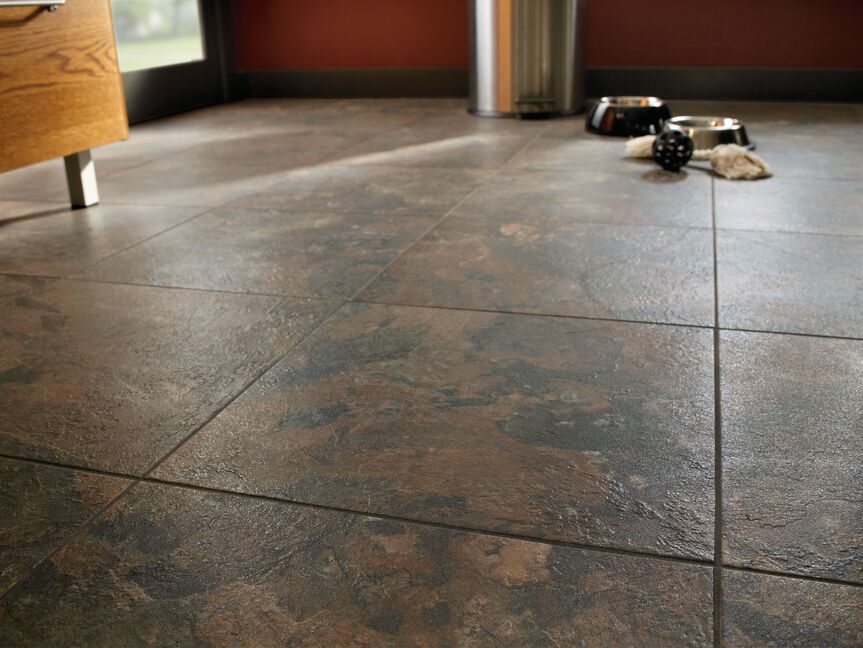
Engineered stone tile is a composite flooring material made from crushed natural stone combined with resins and performance binders.
Unlike natural stone tiles, which are quarried and cut, engineered stone tiles are manufactured under controlled conditions. That process allows for consistent sizing, predictable performance, and improved resistance to moisture and stains.
You may also see this category referred to simply as engineered tile. In residential flooring, both terms typically refer to the same stone-based composite product used for floors, walls, and backsplashes.
Engineered stone tile is made by combining crushed natural materials, such as limestone, marble, or quartz, with resins and color pigments. This blend is formed and compressed under controlled conditions to create a dense, durable tile.
The controlled process removes air pockets, improves density, and creates a non-porous surface that resists moisture and staining.
Once formed, the material is cured and finished, then cut into precisely sized tiles. This consistency is a key reason engineered tile installs more predictably and performs more reliably than natural stone.
"Manufacturing engineered stone allows us to control density and structure in ways that aren't possible with quarried materials. That consistency translates directly to better durability and easier installation in residential spaces." – Olga Rivas, Sr. Research Scientist at AHF.
The result is a tile that delivers the look of stone while improving performance, comfort, and long-term care.
While engineered stone tile and natural stone may look similar, they behave very differently in real homes.
| Feature | Engineered Stone Tile | Natural Stone Tile |
|---|---|---|
| Appearance | Consistent stone visuals | Natural variation |
| Surface | Non-porous | Porous |
| Sealing Required | No | Yes |
| Comfort Underfoot | Warmer, slightly flexible | Cold, rigid |
| Crack Resistance | More forgiving | Susceptible to cracking |
| Installation | Easier and faster | Labor-intensive |
| Maintenance | Simple routine cleaning | Ongoing sealing and care |
For homeowners who want the look of stone without the long-term maintenance, engineered tile is often the more practical choice.
Engineered stone tile solves many of the challenges homeowners face with natural stone floors. While stone offers beauty and character, it comes at a higher cost, with substantially more complex installation and ongoing maintenance.
Engineered tile takes a different approach, offering a more budget-friendly option with fewer maintenance requirements.
Market data reflects its more homeowner-friendly profile. As engineered stone tile becomes easier to source and install, more families are choosing it for high-use areas like kitchens and bathrooms. The engineered stone market is expected to reach approximately $36.76 billion by 2030, growing at a 5.8% CAGR, driven by demand for materials that are easier to live with and maintain than natural stone (Grand View Research).
Engineered stone tile has grown in popularity because it addresses the practical realities of everyday living. From installation and maintenance to comfort and long-term durability, it offers clear advantages for homeowners who want the look of stone without the complexity that often comes with it.
The following benefits highlight why engineered stone tile continues to stand out as a smart, versatile flooring choice for today's homes.
Natural stone is porous, which means you must seal it regularly to prevent staining and moisture absorption. Engineered stone tile is non-porous by design, resisting stains, water, and everyday spills without the need for sealing.
Its composite construction also makes it more resistant to scratches, chips, and impact, especially in high-traffic areas of the home.
Engineered tile installs faster than natural stone and is more forgiving of minor subfloor irregularities. Consistent sizing and flexible construction reduce installation time and lower the risk of cracking.
In some cases, engineered tile is even suitable for experienced DIY homeowners, something rarely recommended for natural stone installations.
Because engineered stone tile is non-porous, it performs well in kitchens, bathrooms, basements, and laundry rooms. Moisture exposure that can damage or stain natural stone is far less of a concern.
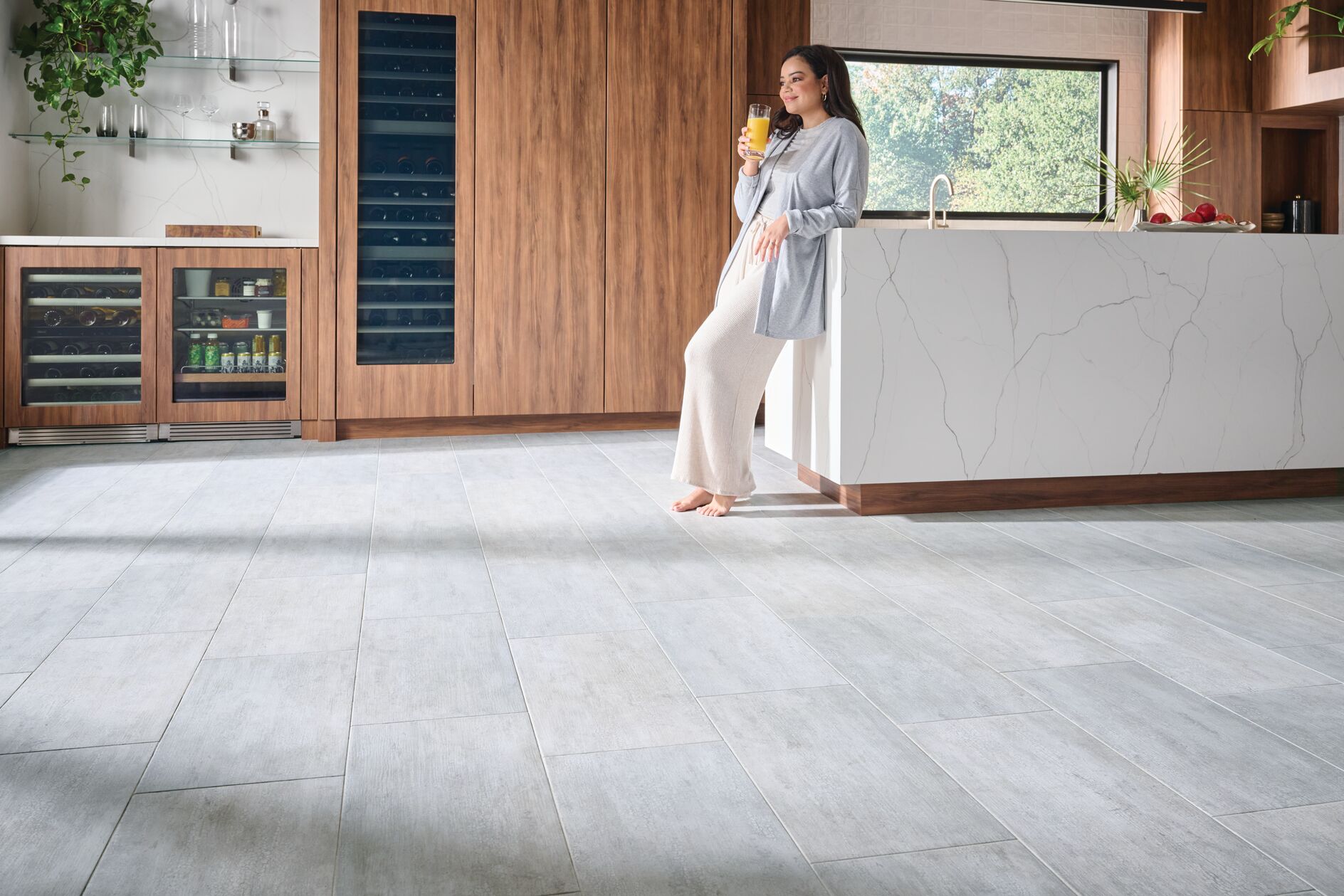
Engineered tile feels warmer and more comfortable than cold, rigid stone. Its slight flexibility adds comfort in spaces where you stand often, such as kitchens and work areas.
Engineered stone tile offers uniform color and pattern from tile to tile. This consistency simplifies design decisions and creates a more predictable finished look, especially in large spaces.
Engineered stone tile is widely considered easier to install than traditional stone or ceramic tile, but one of its biggest advantages is flexibility.
Natural stone installation typically requires specialized tools, extensive subfloor preparation, and a high level of precision. Variations in thickness and density must be managed carefully, and even small inconsistencies can lead to cracking or uneven surfaces. Natural stone tiles are also significantly heavier, which adds to the complexity of handling, transportation, and installation.
Engineered stone tile simplifies that process.
Because engineered tiles have consistent dimensions, the layout is more predictable, and cutting is easier. Many installations require fewer specialized tools, and the material is more forgiving of minor subfloor irregularities.
Many homeowners can install engineered tile, such as Armstrong Flooring® brand Alterna®, in as little as a single day. Compare that to natural stone tile, which often takes 2 to 5 days to complete.
For homeowners who want the most authentic stone appearance, you can install engineered stone tile using traditional mortar and grout, creating realistic grout lines and a finished look that closely mirrors natural stone.
"Using mortar installation allows engineered stone tile to achieve a more traditional tile appearance, while still benefiting from the consistency and performance advantages of an engineered product." – Olga Rivas, Sr. Research Scientist at AHF.
Regardless of method, engineered stone tile installations are typically faster and simpler than stone installations, often reducing labor time from several days to a much shorter window.
Natural stone floors require ongoing maintenance. Because stone is porous, it requires regular sealing to protect against stains and moisture. Spills need immediate attention, and harsh cleaners can damage the surface.
Engineered stone tile removes much of that burden.
Routine care typically includes sweeping or vacuuming and occasional damp mopping with a neutral cleaner. There's no need for sealing, polishing, or special treatments.
For busy households, this low-maintenance profile is a significant advantage.
Thanks to its durability and moisture resistance, engineered stone tile works well in many residential spaces, including:
Its balance of comfort and performance makes it especially appealing in high-traffic and high-moisture areas.
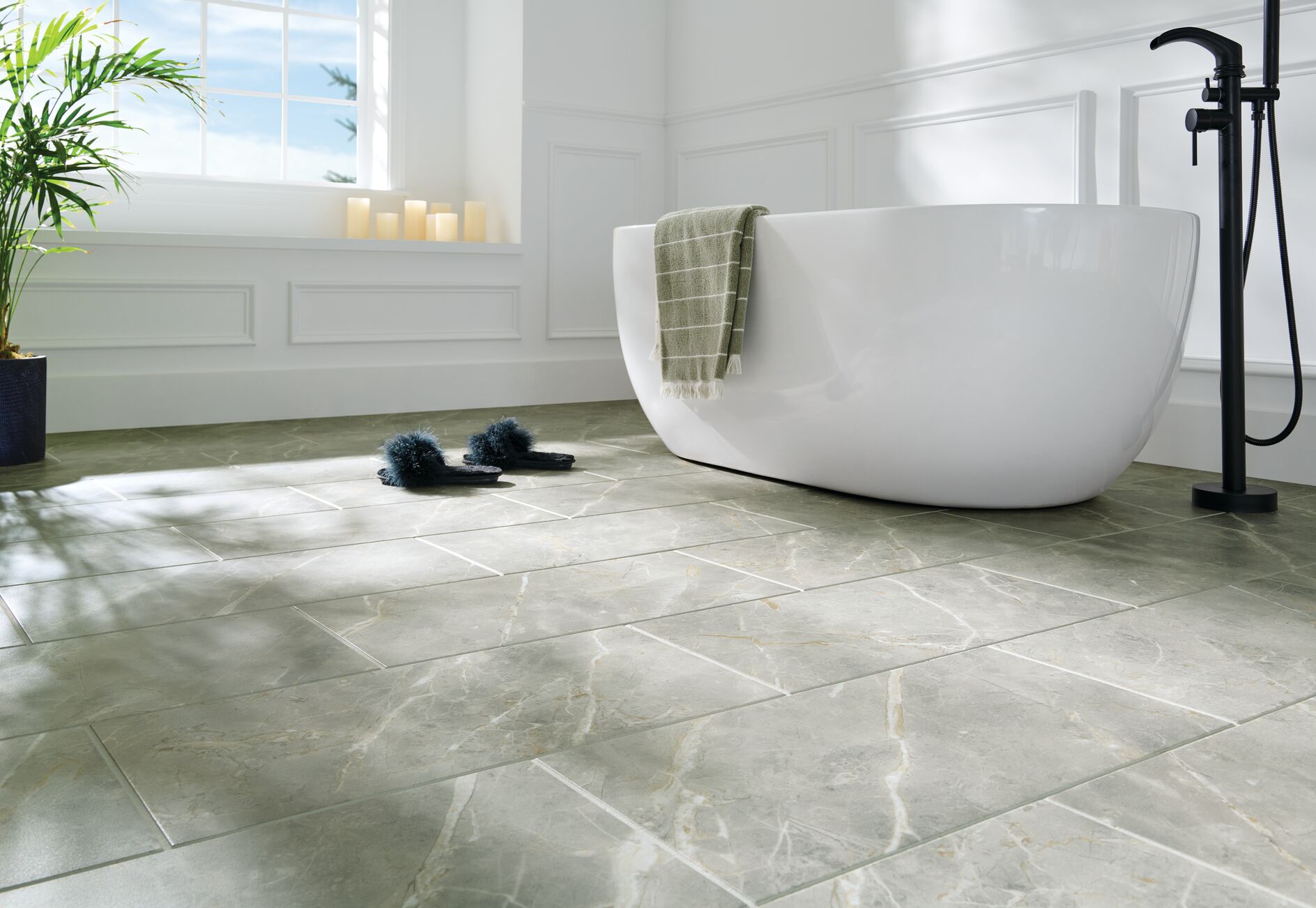
Engineered stone tile bridges the gap between the beauty of natural stone and everyday practicality. It delivers the look homeowners love while addressing common concerns around installation, comfort, and maintenance.
For those drawn to stone yet seeking a surface better suited to modern living, engineered stone tile offers a compelling, long-term solution. Brands like Armstrong Flooring, with more than a century of flooring experience, have helped shape this category for residential spaces. Products such as Alterna engineered tile reflect that evolution, pairing stone-inspired design with performance features designed for real homes.
The result is a floor that honors the character of stone while meeting today's homeowners' expectations.
To explore engineered stone tile options or find a retailer near you, visit the Armstrong Flooring website.
Engineered tile typically refers to stone-based composite tiles used for floors and walls. In residential settings, it is often used to describe engineered stone tile.
Engineered stone tile may offer less natural variation than quarried stone and typically costs more than basic ceramic tile. However, it usually requires less maintenance and is easier to install than natural stone.
Engineered stone tile is non-porous and resists moisture, making it suitable for kitchens, bathrooms, and basements.
 Checking Availability